
Diabetes is one of the most common chronic health conditions worldwide, affecting millions of people across all age groups.
So, how does diabetes affect the body?
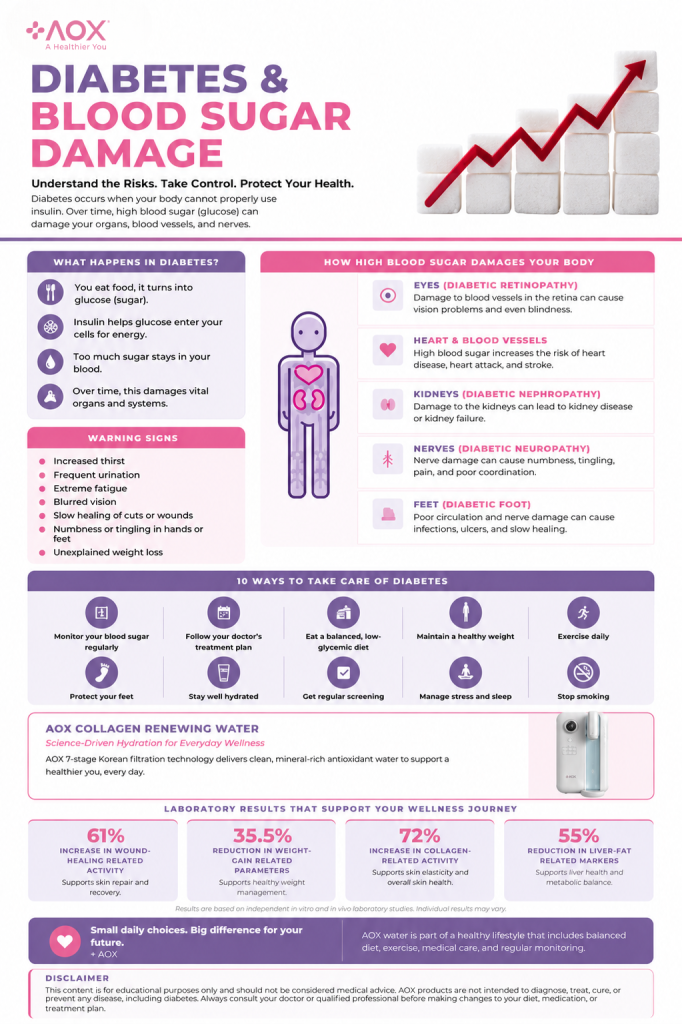
When blood sugar remains consistently high over time, it may gradually damage blood vessels, nerves, organs, circulation, and healing processes — often before symptoms become obvious.
The good news is that with proper lifestyle habits, regular monitoring, medical care, and healthier daily routines, many people are able to better manage their blood sugar and reduce the risk of long-term complications.
What Happens in Diabetes?
The body converts the food we eat into glucose (sugar), which is used as energy by our cells.
Insulin, a hormone produced by the pancreas, helps glucose enter the cells.
In diabetes:
- The body may not produce enough insulin, or
- The body may not use insulin effectively
As a result, excess sugar stays in the bloodstream instead of being properly used by the body.
Persistently high blood sugar levels may gradually affect:
- Blood vessels
- Nerves
- Organs
- Circulation
- Healing processes
What Causes Diabetes?
Type 2 diabetes develops through a combination of genetic, lifestyle, and metabolic factors.
Common risk factors include:
- Excess body weight
- Poor diet
- Physical inactivity
- Family history
- Poor sleep quality
- Chronic stress
- Increasing age
Early awareness and healthier habits may help reduce long-term risks.
How High Blood Sugar Can Affect the Body
Eyes (Diabetic Retinopathy)
High blood sugar may damage the tiny blood vessels in the retina, potentially affecting vision over time.
Heart & Blood Vessels
Diabetes may increase the risk of:
- Heart disease
- Stroke
- High blood pressure
- Poor circulation
Kidneys (Diabetic Nephropathy)
The kidneys work hard to filter waste from the blood. Long-term elevated glucose levels may strain and damage these delicate filtering systems.
Nerves (Diabetic Neuropathy)
Nerve damage can lead to:
- Tingling
- Numbness
- Burning sensations
- Reduced coordination
Feet (Diabetic Foot Problems)
Poor circulation and nerve damage may slow wound healing and increase infection risks.
This is why proper foot care is extremely important for diabetic individuals.
Common Warning Signs of High Blood Sugar
Some symptoms may include:
- Increased thirst
- Frequent urination
- Fatigue
- Blurred vision
- Slow-healing wounds
- Tingling in hands or feet
- Unexplained weight changes
If you experience these symptoms, it is important to seek professional medical advice early.
10 Everyday Habits That Help Support Better Diabetes Care
1. Monitor Blood Sugar Regularly
Tracking glucose levels helps you understand how food, exercise, stress, and sleep affect your body.
2. Follow Your Doctor’s Advice
Medication and treatment plans should always be followed consistently.
3. Eat a Balanced Diet
Focus on:
- Vegetables
- Lean proteins
- Fibre-rich foods
- Lower glycemic choices
- Controlled portions
4. Maintain a Healthy Weight
Even moderate weight loss may help improve insulin sensitivity.
5. Exercise Regularly
Daily movement helps the body use glucose more effectively.
6. Stay Hydrated
Hydration supports overall metabolic function and circulation.
At AOX Singapore, the philosophy has always focused on promoting healthier daily hydration habits through clean, mineral-rich drinking water designed for everyday wellness.
While no water can cure diabetes, maintaining proper hydration alongside balanced nutrition, exercise, and medical care may support overall well-being and healthier lifestyle routines.
Looking to understand the science behind AOX water?
Explore our guide on What Is Collagen-Renewing Water?
You may also find our article on Can High Cholesterol Be Reversed? helpful for broader wellness education.
7. Protect Your Feet
Inspect your feet regularly and seek medical attention for wounds that heal slowly.
8. Get Regular Health Screenings
Routine checkups may help detect complications earlier.
9. Manage Stress and Sleep
Stress hormones and poor sleep may affect blood sugar control more than many people realize.
10. Avoid Smoking
Smoking may worsen circulation and increase cardiovascular risks.
Small Daily Choices Matter
Managing diabetes is usually not about one “miracle solution.”
Instead, it often comes down to consistent daily habits:
- Better food choices
- Staying active
- Quality sleep
- Stress management
- Proper hydration
- Medical follow-ups
These small actions, repeated consistently over time, may help support long-term wellness.
A Growing Focus on Wellness & Research
Today, more people are paying attention not just to what they eat, but also to the quality of their overall lifestyle habits and hydration.
AOX has continued to focus on science-driven hydration and wellness innovation, including independent laboratory studies involving collagen-related activity, cell-repair related laboratory activity, and general wellness and lifestyle-related laboratory markers.
However, it is important to understand that these findings are based on laboratory and controlled studies, and should not be viewed as a treatment or cure for diabetes.
The foundation of diabetes care will always remain:
- Professional medical advice
- Healthy lifestyle habits
- Long-term consistency
Final Thoughts
Diabetes can affect many parts of the body, but early awareness and healthier habits may help reduce long-term risks.
The journey toward better health does not happen overnight. It begins with small, sustainable changes practiced consistently every day.
Better food choices, movement, hydration, sleep, and regular medical care all work together to support a healthier future.
Frequently Asked Questions
What are the warning signs of diabetes?
Common warning signs may include increased thirst, frequent urination, fatigue, blurred vision, slow-healing wounds, tingling sensations, and unexplained weight changes.
Can high blood sugar damage organs?
Yes. Persistently high blood sugar may gradually damage blood vessels, nerves, kidneys, eyes, and other organs over time.
Can lifestyle changes help manage diabetes?
Healthy eating, exercise, weight management, sleep, stress control, hydration, and proper medical care may all help support better diabetes management.
Why is foot care important in diabetes?
Poor circulation and nerve damage may reduce sensation and slow wound healing, increasing the risk of infections and foot complications.
Does hydration matter for diabetes?
Proper hydration supports circulation, metabolic function, and overall wellness as part of a healthy lifestyle.
Disclaimer
This article is intended for educational and informational purposes only and should not be considered medical advice. Always consult a qualified healthcare professional regarding any medical condition, medication, or treatment plan. AOX products are not intended to diagnose, treat, cure, or prevent any disease, including diabetes. Individual results may vary.